Stroh’s Beer had survived wars, depressions, and generations of change—nearly a century and a half of continuity that made it feel permanent. In Detroit, Stroh’s was not simply a brand; it was a given. It belonged to the city the way factories, shift whistles, and corner bars did. It was woven into the fabric of Michigan life—the rhythm, the atmosphere, the unspoken backdrop of everyday moments.
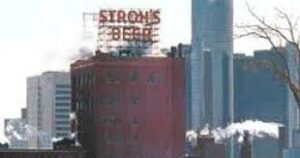
For me, it was part of identity. In high school, you couldn’t step two feet into a party without first confronting a sea of those iconic red-white-and copper colored cans — the Stroh’s logo and it’s heraldic lion and vintage typography flashing back at you like a familiar face. It was everywhere and connected to everything: sporting events and weddings, late nights, boating on the lake, crowded corner bars, neighborhood taverns, and packed sports bars humming with noise and expectation. Stroh’s wasn’t something you chose so much as something you inherited. It was present, assumed, and deeply loved—so embedded in the life of the place that imagining Detroit without it once felt impossible. Loving it did not save it, and once that became clear, the story shifted from what Stroh’s had meant since the 1850s to how it was dismantled.
By the late 1990s, Stroh’s—once the third-largest brewer in America—was no longer being measured in barrels or generations, but in liquidation value. When the company was broken up and sold in 1999, analysts estimated the deal at roughly $400 million, though the actual terms were never disclosed. After debt and obligations were settled, reports suggested that the Stroh family itself would receive less than $100 million—a company that just a decade ago was approaching a billion dollar valuation — a stark and sobering end to a 140-year plus legacy.
The loss rippled outward: devastating for generations of Stroh family members and deeply felt by Detroiters who had grown up believing the brand would always be there.
The city was already mourning the steady disappearance of its industrial soul. Stroh’s collapse felt less like a business failure than a civic wake.
For me the fall of Stroh’s was never abstract.
Because of my brother Michael’s marriage to Linda—Gari Stroh’s ex-wife and the mother of their two children, Suzanne and Greg, to whom I had become a step-uncle—the Stroh story entered my life not as history, but as family. I saw the collapse up close, particularly what it meant for the youngest generation. It was a loss of wealth and status and a rupture whose consequences radiated outward to dozens of heirs, quietly decimating what many had assumed would ensure a comfortable life style going forward for many generations of Strohs.
Michael and Gari, a 5th generation Stroh working in the company, one level below the CEO, were close friends even before Gari married Linda, and that bond survived both marriage and divorce. My brother helped Gari open the iconic Stroh’s Ice Cream Parlor on the Hill in Grosse Pointe Farms in the late 1960s.
Among the many heirs absorbing the same quiet devastation was Frances Stroh, daughter of Gari’s brother Eric. Years later she would write a powerful memoir, Beer Money, A Memoir of Privilege And Loss (Harper Collins, 2016), chronicling Stroh’s decline and collapse and her family’s unraveling with remarkable clarity. Her book captures something outsiders often overlook: when a legacy business collapses, the numbers tell only part of the story. The real damage unfolds quietly—inside families, inside identities, and inside relationships that never fully recover.
Among the Strohs there at the bitter end was Peter Stroh — often remembered because he spoke for the brand. He was articulate, public-facing, and closely identified with what Stroh’s had once been. But by the time the company came apart, speaking for Stroh’s and controlling its fate were no longer the same thing. Also there — John Stroh, the final president and CEO, supported by senior family executives including Gari and Eric. Together, they were not presiding over a dynasty in motion, but managing a controlled unwinding of something they could no longer save.
Irony, it seems, has a long memory. After his 25 year marriage with Linda and their divorce, my brother’s life curved unexpectedly toward the very empire Stroh’s could not survive. He married Mary Ann Krey, friend of the Busch family and owner of Krey Distributing, widely regarded as one of the crown jewels of Budweiser distributorships — in St. Charles County, Missouri, just northwest of St. Louis. From the ashes of one beer legacy to the abundance of another — his story alone might justify a memoir — Beer Money, before the title was taken.
Only later did I understand that what happened to the Strohs was not an isolated tragedy. but part of a larger transfer of power that repeated itself wherever legacy met the machinery of modern capital.
I When Beer Belonged to Cities
For most of the twentieth century beer was civic infrastructure. Detroit had Stroh’s. St. Louis had Budweiser. These were not just employers; they were cultural anchors, shorthand for place and identity.
When people said “Stroh’s” it conjured up Detroit. When people said “Budweiser” it conjured up St. Louis.
That sense of belonging created a dangerous illusion: that permanance was mutual. The brewing families believed that cities needed them as much as they needed the cities. For decades, that belief held.
Until it didn’t.
II Two Families, Two Paths, One Ending
The Strohs lost control through fragmentation, market pressures, and family corporate decisions that slowly hollowed out what once had been whole.
The Busch family did not lose Anheuser-Busch; it was taken from them by the mathematics and machinery of modern capitalism. Once the company went public in 1970, tradition mattered less than share counts and fiduciary duty. When InBev, a European/South American beer behemoth, arrived with an offer too large to refuse, history yielded to balance sheet logic. The board was legally obligated to accept the offer.
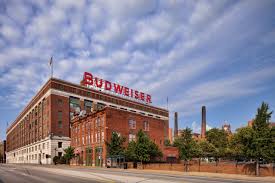
Anheuser-Busch had been taken public by August Busch Jr. decades before, not as a surrender of control but as a strategy to preserve it—an irony that would boomerang decades later when the same mechanics used to take the company public were used against it in a hostile takeover. The hostile takeover left Anheuser-Busch folded into a larger global enterprise while quietly excising the Busch family from any role in its future.
In both cases, the families mistook their cultural stronghold for lasting power and control.
III The Fatal Misreading of Power
The modern corporate era is unforgiving to symbolism, treating legacy, ritual, and identity as expendable once they cease to confer measurable advantage.
Executive titles feel powerful until ownership changes. Board seats matter until power consolidates. Even CEOs become transitional until capital decides otherwise as became painfully clear after Anheuser-Busch was absorbed into InBev. August A. Busch IV retained the CEO title briefly but authority drained away almost immediately. Budgets tightened. Culture shifted. Decisions moved out of the United States.
August Busch IV left the business not only without power, but without an enduring asset.
That distinction — between roles that vanish and assets that endure — is where the story turns.
IV The Crown Jewel
The real power in beer was never the brewery.
It was distribution.
Distributorships are contractual, protected, and durable. They survive mergers, boards, CEOs, and brand transfers. They generate cash quietly, without ceremony, without sentiment.
This is why Krey Distributing, widely regarded as one of the crown jewels in the Anheuser Busch national distribution network, mattered so profoundly — and why owner Mary Ann Krey’s decision in 2006 to sell it back to the Busch family was consequential.
The origins of Krey Distributing were bound up in proximity and trust. According to Steven Busch in a December 2006 St. Louis Business Journal article, his father, August Busch III, had been best friends with John Krey since way back when they were in school. John purchased the distributorship in 1978. It is widely assumed that there was a bargain element in this transaction but no one can know for sure. There are no public records memorializing this private transaction.
Tragically John Krey died of cancer in 1986, and his widow, Mary Ann, assumed control of the business, running it for the next two decades. By the time she sold the distributorship in 2006, she had led it longer than her husband had lived after acquiring it. Her decision to sell came not from sentiment, but from timing: she was ready to retire, and the asset commanded extraordinary value.
Mary Ann married my brother Michael Van Lokeren in 1994, well into her tenure as owner. Their marriage explains my proximity to the Anheuser Busch side of the story.
What followed has never been formally documented and is best understood as local business lore rather than settled fact. Around the time his brother, August Busch IV, assumed the CEO position at Anheuser-Busch in late 2006, the Busch family sought to bring Krey Distributing—the St. Charles County distributorship—back into family hands, this time for Steven Busch.
Whether exact in detail or softened by retelling, the outcome was unmistakable: there was no bargain element flowing to the Busch family in that private transaction. During the span of Mary Ann’s ownership, St. Charles County had tripled in population, transforming the distributorship into an extraordinarily valuable franchise and placing its likely value in the $50 million to $150 million range.
That is part of the lesson.
The significance of the sale lies in motive and in outcome. In 2006—two years before the InBev acquisition—what changed hands was a tangible asset. A distributorship, even though purchased at maximum value would later prove more durable than executive titles, board seats, or family stewardship of the brewery itself.
History often assigns meaning retroactively. What felt like a ruthless but rational transaction at the time in 2006 would, by 2008, read as pivotal—not because it was prescient, but because it was the right time between a willing buyer and a willing seller and contractual. When the Busch family imprint evaporated, the asset remained.
What made Mary Ann’s decision to sell even more striking is its timing. She sold the distributorship in 2006, two full years before the InBev acquisition of Anheuser-Busch. There was no hostile bid yet, no global consolidation shock, no clear signal that the Busch family’s control of the brewery itself was nearing an end.
In other words, she could not have known how important—or how symbolic—her decision would become.
In the final analysis the distributorship she had returned to the family became one of the few pieces of the old order that actually endured.
V Unequal Inheritances
The aftermath of consolidation reveals an uncomfortable truth: legacies do not collapse evenly.
Some heirs retained assets that endured.
Others absorbed the heartbreak and loss without compensation.
One Busch, Steven, never became CEO yet held something permanent — one of the crown jewel distributorships.
Another, August IV, became CEO just long enough to lose it.
VI Closing
Detroit felt Stroh’s loss immediately when the company was dismantled leaving very little trace of its former identity.
For St. Louis, the loss unfolded quietly—no sirens, no closing bell—just the gradual disappearance of the Busch family, whose name had once been inseparable from Budweiser itself.