There are some family stories that belong only to the family, and then there are others that spill out into the public square because the family name itself has become part of history. The Stroh family of Detroit is one of those names.
For a century and a half, Stroh’s was not just a beer. It was a Detroit institution, a Michigan story, a family enterprise, a symbol of immigrant ambition, industrial America, and the kind of prosperity that seemed, from the outside, almost permanent. The brewery had begun in Detroit in the 1850s and grew from the work of Bernhard Stroh, a German immigrant who brought with him not just a beer recipe, but an instinct for commerce, identity, and permanence.
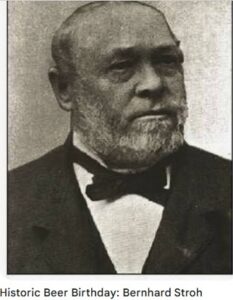
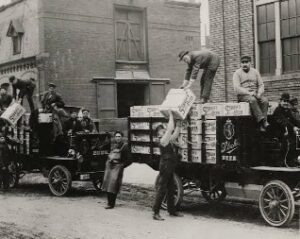
By the time I came of age in Grosse Pointe, Stroh’s was simply part of the atmosphere. It was on signs, at parties, in kegs, in the hands of fathers, sons, mothers, daughters, uncles, boaters, golfers, and high school kids who were not supposed to be holding it at all. The name carried a kind of Michigan inevitability. If Detroit had cars, it also had Stroh’s. If there were Tigers games, barbecues, boats, basements, weddings, graduation parties, and summer nights on Lake St. Clair, there was often Stroh’s nearby.
It seemed like the kind of business that would go on forever.
But forever, in business and in families, is often a mirage.
The Stroh Brewery Company, by all outward appearances, had once been secure. But like many ambitious family businesses that grow too fast, borrow too much, acquire too much, and assume too much about tomorrow, Stroh’s overextended itself. Expansion became burden. Ambition became exposure. The great family engine that had produced beer, status, wealth, and monthly distributions began to sputter.
Then it stopped.
Frances Stroh, in her memoir Beer Money, wrote with painful honesty about what happened when the family fortune disappeared and the beer that had once seemed like “the gift that kept on giving” stopped giving. The brewery ceased to exist in its original family form. The brand survived only as a label under another corporate roof.
The old stream of family distributions — whether understood as dividends, trust income, or beer money itself — had effectively dried up.
For many Strohs, this was not merely a financial event. It was an identity event.
What does an heir do when the inheritance disappears?
What does a family member do when the family story collapses?
What does a person do when the name that once opened doors becomes instead a reminder of loss?
Some people would have been embittered by it. Some might have lived out their days in complaint, memory, grievance, or nostalgia, forever measuring the present against what had been lost. That would have been understandable. When a family fortune disappears, so does a certain idea of the future. The staircase that was supposed to carry generations upward is suddenly gone.
But Greg Stroh did something else.
He reinvented himself.
I first knew Greg not as an entrepreneur, not as the founder of a national beverage brand, not as a fifth-generation Stroh, and certainly not as a future example of resilience. I knew him as a little boy. He was an infant in the late 60s when my brother Michael married his mother, Linda, who had been married to Gari Stroh. By that marriage, on paper at least, I became Greg’s step-uncle.
It sounds more formal than it felt. Families are often built out of strange legal scaffolding: marriage, remarriage, divorce, stepchildren, half siblings, former spouses, new houses, old names, and children who simply find themselves in the middle of adult arrangements they did not create. Greg and his older sister Suzanne were part of that new family configuration, and for a time I was part of their orbit.
During my high school years, I occasionally babysat Greg and Suzanne alongside their regular babysitter and close family friend, Sandi Russell of Grosse Pointe. Sandi was a year older than I was, and through that shared responsibility, we became friends. We were both students at Grosse Pointe South High School, just a block away.
It was one of those small chapters in youth that does not seem important at the time. You are simply there, in someone’s house, looking after children, making sure no one gets hurt, no one wanders too far, no one cries too long, and the parents return to find the house still standing.
I could not possibly have imagined then that the little boy in front of me would one day carry a broken piece of a famous Detroit legacy into Boulder, Colorado, and help turn it into something new.
That is the strange thing about children. You see them in their beginnings, when all they appear to be is appetite, energy, mischief, sweetness, and need. You do not yet see the weight that life will place on them. You do not envision the accidents, losses, business failures, family ruptures, or griefs waiting somewhere down the road. You also do not see the resourcefulness, toughness, or imagination that may later emerge from them.
Greg would need all three.
The collapse of the Stroh Brewery was one thing. A public event. A business event. A family-finance event. A headline. A case study. A cautionary tale about overexpansion and family inhertance.
But Greg also suffered a more intimate catastrophe. When he was a teenager, his father was severely injured in an equestrian accident that left him a quadriplegic. It was the kind of event that changes not merely one life but the emotional weather of an entire family. A child does not pass through such a thing untouched. A father’s physical world becomes altered. A household becomes altered. The future becomes altered.
It would be too easy, and perhaps too presumptuous, for me to pretend I know exactly what Greg experienced in the depths of that loss. I do not. My connection to him was real but limited by time, family circumstance, distance, and eventually divorce. My brother and Greg’s mother later divorced in the late 80s when Greg was in his early 20s, and as often happens in blended families, the paper connection dissolved and the human connection thinned.
I lost touch with him.
But I did not forget him.
And over the years, as pieces of his story emerged in the public record, I found myself more and more struck by what he had done. Not because he had become wealthy, though he apparently did very well. Not because he had sold a company to PepsiCo, though that is no small thing. But because of the symbolic beauty of what he chose to build.
He did not build another beer company.
He built Izze with his partner Todd Woloson.

Greg/Todd left to right
A sparkling juice.
A drink with bubbles, color, flavor, youth, health, lightness, and joy.
There is poetry in that.
Izze was not born from nowhere. In the mid-80s, Stroh’s had ventured beyond beer with Sundance Natural Juice Sparklers, a fruit-juice-and-sparkling-water drink that hinted at what the brewery might have become had it successfully reinvented itself as a broader beverage company. Greg Stroh, in Boulder, took that abandoned family thread and wove it into something new.
By 2002, only a few years after the family brewery collapse, Izze entered the national beverage market with a line of sparkling juices. It was not beer, but it had the Stroh instinct hidden inside it: branding, flavor, distribution, shelf presence, and the mysterious art of making a bottle or can feel like a small promise.
Greg had learned something from the family business. How could he not have? Even when a family business collapses, it leaves behind an education. Sometimes the education is formal. Sometimes it is absorbed by osmosis. A child hears the adult conversations, understands the trucks, the shelves, the salesmanship, the pride, the panic, the mistakes. He may not be running the company, but the company is running somewhere through him.
Izze grew quickly. In fact, “quickly” may be too mild a word. Its rise was almost meteoric. Within a few years, it had moved from a Boulder idea into national distribution. It found its place in stores, cafes, markets, restaurants, and the wider American search for beverages that seemed fresher, healthier, more natural, and less burdened by the old soda formulas. It arrived at the right cultural moment.
Then one of the giants noticed.
PepsiCo acquired Izze in 2006, reportedly for somewhere in the neighborhood of seventy-five million dollars. Whether that was exactly the number or not, the point remains: Greg Stroh and Todd Woloson had taken an idea and, in roughly four years, built something substantial enough that one of the largest beverage companies in the world wanted to own it.
I doubt their original exit strategy contemplated a four-year horizon. Most entrepreneurial stories are not that clean. They begin with hope, confusion, improvisation, borrowed money, sleepless nights, arguments, blind alleys, and moments when the founders wonder whether they have made a terrible mistake. The public sees the sale. The founders live the uncertainty.
But the sale happened.
And when it did, the old Stroh story acquired a remarkable second act.
There is something deeply satisfying about the symmetry of it. The old family had made beer in Detroit. One descendant, after the fall, helped make sparkling juice in Boulder. The old company had struggled under the weight of expansion. Izze, by contrast, seemed to rise with astonishing speed. The old distributions of income stopped. Greg created a new source of value. The old family business ended as a family-controlled brewery. Greg’s new business ended, at least from a founder’s standpoint, as a successful acquisition by a beverage giant.
It was not restoration.
It was transformation.
That distinction matters.
Greg did not bring back Stroh’s. He did not reverse the collapse. He did not rebuild the lost trust, rescue every cousin, or restore the family name to its former place. Life rarely gives us that kind of tidy redemption. More often, the past remains broken. The losses remain losses. The dead are still dead. The injured are still injured. The vanished fortune is still vanished. The old brewery is still gone.
But transformation is not nothing.
In fact, transformation may be the only true victory most of us are ever offered.
A person takes what happened, what was lost, what was inherited, what was endured, what was learned, and makes something else from it. Not the same thing. Not a perfect thing. Not an undoing. Something else.
That is what Greg’s story represents to me.
I did not seek his blessing to write this chapter. Perhaps I should have. Perhaps he would have preferred not to be written about at all by a former step-uncle who knew him briefly as a child and then watched, from a distance, as his public story became one of entrepreneurial reinvention. I am sensitive to that. I do not write this as an invasion of his private life or as a claim of intimacy I no longer possess.
I write it as acknowledgment.
His story has been told in pieces—in business articles, family histories, beverage-industry accounts, and the larger public narrative of the Stroh family’s rise and fall. But sometimes the pieces deserve to be placed together, not to expose, but to understand. A child of a famous family. A family fortune diminished. A father tragically injured. A brewery gone. A name burdened by history. And then, years later, a new product, a new city, a new partner, a new market, a new beginning.
The easy story would be that Greg Stroh succeeded because he was a Stroh.
I suspect the truer story is more complicated.
A family name may open a few doors, but it does not build a company. It does not create a product people want. It does not earn shelf space, persuade distributors, manage growth, survive competition, or attract an acquirer. In some cases, a family name may even become a burden, especially when the empire attached to it has already fallen. Then the heir is no longer simply an heir. He is a survivor of the inheritance.
That is a much harder role.
And perhaps a more honorable one.
In my own life, I have known something about the disintegration of a family business and family ruptures and the necessity of beginning again when the structure beneath you gives way. I have watched fortunes disappear. I have seen names that once seemed secure become complicated. I have seen families turn on themselves when money, memory, shame, and blame become tangled together. I have seen people become frozen by what happened to them.
Greg’s story suggests another possibility.
A person can be shaped by catastrophe without being defined and confined by it.
A person can come from a fallen house and still build.
A person can inherit loss and still create value.
A person can carry an old recognizable family name into a new unrelated market and make it mean something different.
That is why I find the Izze story so moving. It is not simply that Greg and Todd created a successful beverage company. It is that Greg’s success came in a field so close to the old family trade and yet so refreshingly different from it. Beer had been the Stroh family’s river. Izze was not beer, but it still flowed. It still bubbled. It still depended on taste, identity, packaging, distribution, and the mysterious chemistry between a product and a public mood.
It was, in its way, a different kind of brew.
And that may be the most fitting second act imaginable.
The tap ran dry in Detroit. The monthly distributions stopped. The old assumptions failed. The brewery that had carried generations of Strohs could no longer carry them. But in Boulder, one Stroh descendant helped create something bright, carbonated, and alive. Not the heavy amber of the old beer halls, but the sparkling color of reinvention.
I think back to that little boy I once helped watch in Grosse Pointe, and I wonder whether any adult in the room could have imagined the road ahead of him. Certainly I could not. I was too young myself to understand that childhood is only the first page, and that some lives do not reveal their meaning until after the losses arrive.
Greg Stroh’s life, at least as I understand it from a distance, is not a story about escaping the past. None of us really escapes the past. It follows us in our names, our families, our reflexes, our wounds, our ambitions, and our memories.
But sometimes, if we are fortunate and brave and inventive enough, we can give the past a different ending than the one it seemed determined to impose.
For Greg, that ending came with a bottle of sparkling juice called Izze.
And for anyone who watched the old family tap run dry, that is no small inspiration.