The Famous Father-in-Law I Never Knew
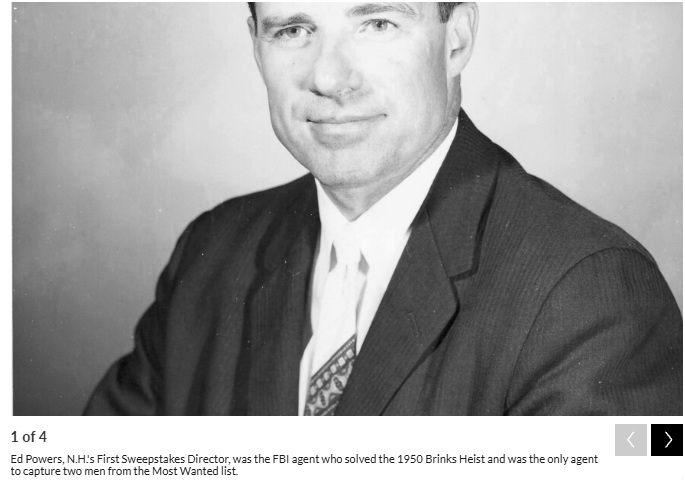
Edward Joseph Powers died in 1989, ten years before I met his daughter Marcie who I would later exchange wedding vows with in 2003.
I never shook his hand. Never sat across from him at a holiday table. Never heard his voice tell stories about the FBI, politics, law school, or the strange evolution that would eventually make him known as the “father of U.S. lotteries.”
Everything I know about him came later.
Like an investigator assembling a case file, I pieced him together through family stories, newspaper clippings, professional tributes, photographs, and the enduring imprint he left on those around him. In a strange way, it felt fitting. Edward Powers himself had spent much of his life reconstructing the lives and motives of others.
Over time, an extraordinary portrait emerged.
He was the son of a Chicago police officer, raised in a world where discipline, public service, and authority still carried weight. He was a gifted athlete in his younger years, a good high school basketball player who later became an accomplished golfer and formidable bridge player. He attended Lawrence University in Appleton, Wisconsin for his undergraduate studies before earning his law degree from Georgetown University, where he would later return to teach law himself.
Even without what came next, it would have been an admirable life.
But Edward Powers occupied a far larger stage than I initially realized.
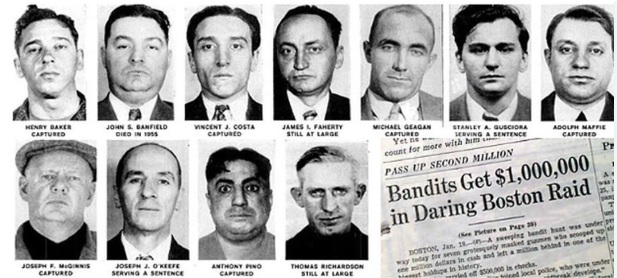
Twice the FBI agent in charge of the Boston office in J. Edgar Hoover’s FBI, he spent six years pursuing the men responsible for the infamous Brink’s robbery, one of the most sensational crimes in American history considered the crime of the century. The robbery captured the public imagination for years — armed men vanishing with enormous sums of money — $2.7 million (tens of millions in today’s dollars.) For almost a full six years investigators struggled to crack the conspiracy.
The breakthrough came in 1956 not through gunfire or car chases but through something far more ordinary: human resentment. Ed Powers focused on a small-time thief named Specs O’Keefe, a convicted petty criminal he suspected might somehow be connected to the Great Brink’s Robbery. It was a long shot, and even his boss J. Edgar Hoover reportedly doubted Powers’ theory. But Ed trusted his instincts.
And he was right.
Facing prison for another offense and convinced he had been cheated out of his share of the loot, Specs agreed to cooperate in exchange for immunity. Ed skillfully exploited the simmering resentment within the gang, turning wounded pride into testimony. With only five days remaining before the six-year statute of limitations was to expire in 1956 negating the possibility of prosecution for the crime, Powers secured indictments against the remaining eight conspirators, saving face and rescuing what had seemed destined to become one of the FBI’s great unsolved failures. Many of the eight received life sentences.
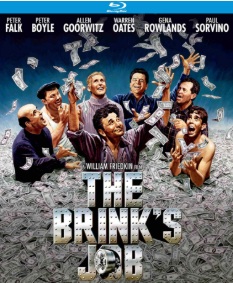
There were no less than four major movies about the Brink’s job—probably the best-known version— directed by William Friedkin and starring Peter Falk, Peter Boyle, and Warren Oates as Specs O’Keefe. Based largely on Noel Behn’s book Big Stick-Up at Brink’s.
For his cooperation, Specs O’Keefe became one of the earliest unofficial participants in what would later evolve into the federal witness protection program. With a target now on his back, he disappeared into a new identity and a new life in the Los Angeles area. And as strange as this may seem he at one point was Cary Grant’s chauffeur under his newly assumed identity of Paul Williams.
But exile has a way of wearing on a man.
Years later, homesick for New England and the East Coast he had left behind, Specs reached back out to the man who had once cornered him, protected him, and ultimately changed the course of his life. In what must have been one of the more extraordinary acts in FBI history, Ed Powers invited the former Brink’s robber to live with him and his family in Bedford, New Hampshire, while he transitioned back east.
Which leaves my wife, Marcie Powers, with a rather unmatched conversation piece: when she was fourteen years old, she lived under the same roof as one of America’s most infamous bank robbers.
It also explains why she consistently dominates at “Two Truths and a Lie.”
After twenty-two years with the FBI, Edward Powers stepped into an entirely different arena—one that was controversial.
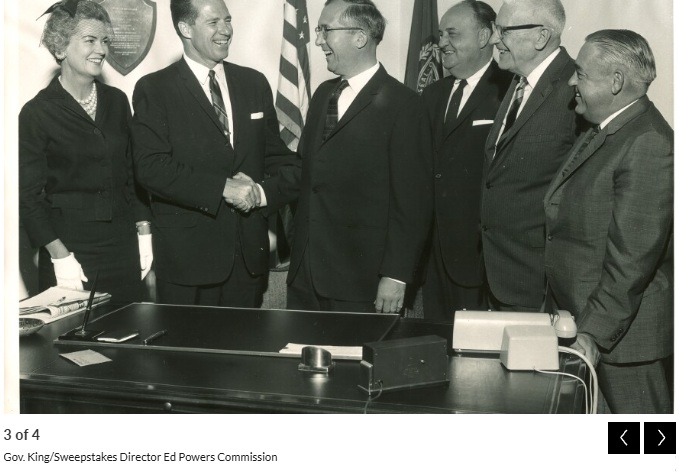
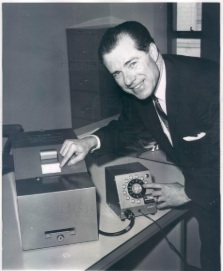
In 1963, New Hampshire officials recruited him to help design and run the first legally authorized state run lottery in the United States breaking a prohibition that had largely existed since the 19th century. The mission was politically delicate. Legalized gambling still carried the lingering smell of organized crime, and the sponsors desperately wanted the public to believe that a lottery could operate honestly, transparently, and without mob influence.
So they hired an FBI man — the very agent who had cracked the Great Brink’s Robbery wide open.
It was one of the great American contradictions: a career law enforcement official becoming the architect of legalized gambling.
But perhaps no one was more qualified.
Edward Powers understood corruption because he had spent decades confronting it. He understood temptation, manipulation, and public skepticism. More importantly, he understood that legitimacy often depends less on the system itself than on whether the public trusts the people running it.
The gamble succeeded.
Over time, Edward Powers became one of the central figures in the creation of modern state lotteries in America. The Handbook of U.S. Lottery Fundamentals, a four-hundred-page industry reference work, would eventually refer to him as the “father of U.S. lotteries.” He served as president of multiple national and international lottery organizations and later consulted with lotteries and gaming companies throughout the country and abroad.
The son of a Chicago cop had become one of the most influential figures in the history of legalized gambling in the United States.
And yet I never met him.
That realization gives the story an odd emotional texture. I know many facts about Edward Powers public life and through Marcie I have learned about his private life. Marcie talks about him adoringly and that he was kind, wittty, competitive, and was a loving father devoted to not only his career but his family — his wife Melva, his son Tom and his two daugthers Marcie and Jan. At first when Marcie would talk about her dad’s career I was skeptical that one man could have packed so much into one life. That skepticism quickly evaporated as I researched his life and the historical record supported everything Marcie had shared with me.
I often wonder what conversations we might have had if our lives had overlapped. As someone drawn to institutions, power structures, public corruption, and the strange ways legitimacy is manufactured in America, I suspect I would have found him endlessly fascinating. I also think about the stories I would have shared with him that he might have gotten a kick out of — like the Vigilante Accountant saga in San Francisco and the unearthing of public corruption in Grosse Pointe Park, Michigan.
An FBI man chasing the Brink’s robbers.
A Georgetown law professor.
The architect of state lotteries.
A public servant trusted to legitimize an activity many Americans once associated with organized crime.
That is not an ordinary life.
But perhaps the most striking part is this: despite all his accomplishments, Edward Powers now survives mostly in memory, story, and influence, like so many men of his generation whose public significance gradually fades outside the families they shaped.
That may be one of the quiet truths of aging and history.
Entire lives — important lives, consequential lives — slowly compress into anecdotes, obituaries, and fading photographs unless someone takes the time to remember them properly.
This chapter is my attempt to do exactly that for the father-in-law I never knew.
is proudly powered by WordPress