I was fourteen when one of my older brothers, twenty-four-year-old David, and my sister-in-law Ronnie, the same age, announced to our family that they were leaving their seemingly idyllic life in Grosse Pointe and Detroit behind. They drove up to my parents’ house on Windmill Pointe in Grosse Pointe Park to deliver the news in person, as if proximity might somehow soften the blow.
It didn’t.
The stunned, deer-in-the-headlights look on my parents’ faces was excruciating to watch. They were losing a son, a daughter-in-law, and three grandchildren all at once. I was losing a brother, a sister-in-law, two nephews, and a niece. At fourteen, I didn’t yet have language for loss on that scale, but I could feel it immediately.
I had been woven into their daily lives—babysitting Matthew, five; Amy, four; and Mark, three, often at their little brick house on Mt. Vernon. Those kids were part of my rhythm, my sense of home. The idea that David and Ronnie would simply step out of the family and never look back felt unreal, almost impossible to process—like watching people walk into blinding fog and only gradually realizing they weren’t coming back.
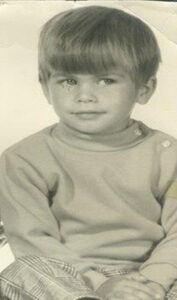
Matthew Van Lokeren
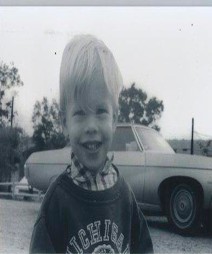
Mark Van Lokeren
They were trading their sweet little brick house in the Farms—bought for them by my parents, for a Volkswagen bus and the hope of a future—with happiness and salvation promised by some holy man in the hills of the Hudson Valley.
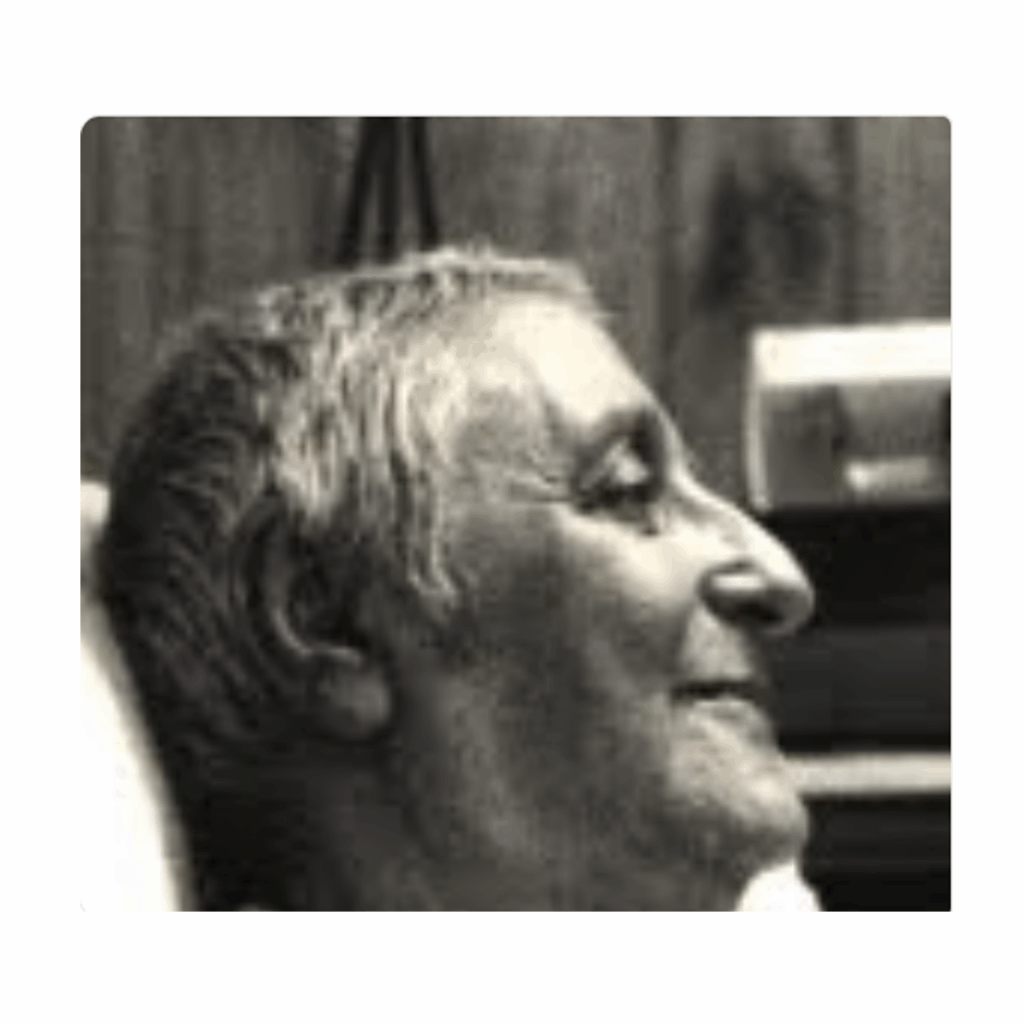
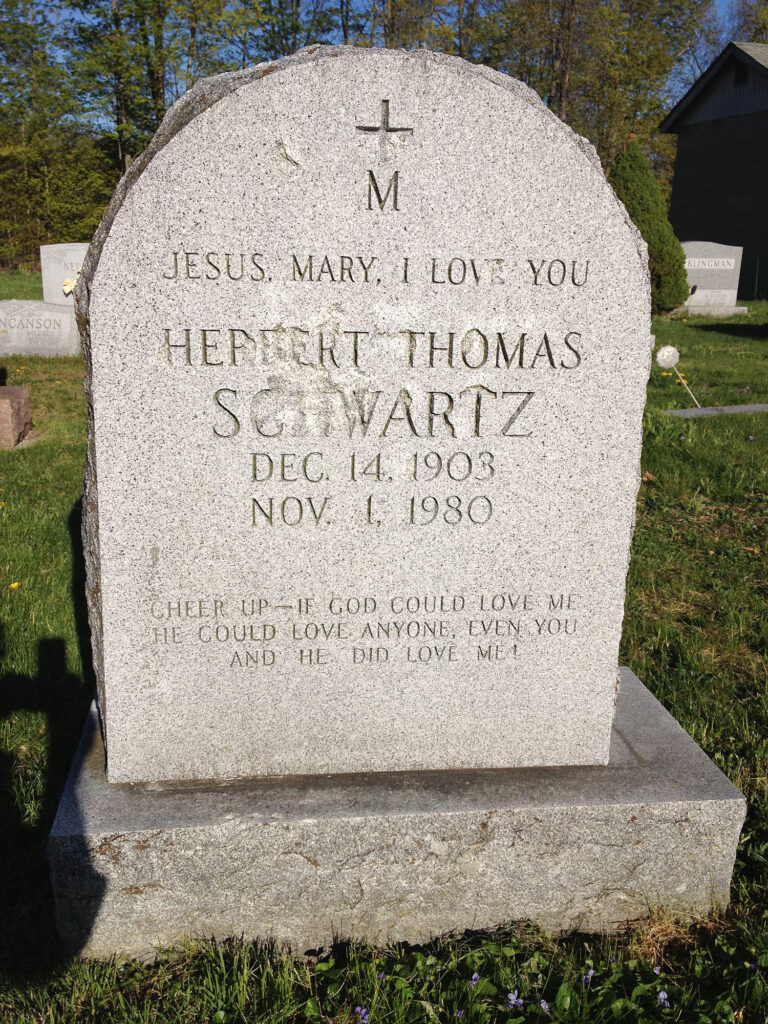
Through friends, they had met a charismatic, self-proclaimed spiritual leader named Herbert Schwartz, who ran a religious commune called Mount Hope on 220 acres of rolling hills outside Middletown, New York. Forty miles from the Catskills. Seventy-five miles north of Manhattan. Herbert styled himself a kind of Jesus whisperer, claiming that if one surrendered complete control, he could deliver them from inherent human evil into holiness and happiness.
David and Ronnie were primed for that message. Both had been steeped in Catholic doctrine from an early age. Ronnie had once seriously considered a calling to the convent; her older sister actually took sacred vows in the Catholic Church. David attended Austin Catholic High School and, years later, taught catechism on Sundays at St. Clare de Montefalco in Grosse Pointe Park.
My own household had moved in the opposite direction. A year earlier, my father had renounced the Catholic Church altogether. He had grown disillusioned—and frankly disgusted—by the behavior of certain local priests he saw drinking heavily and chasing women after hours at bars and restaurants he and my mother occasionally frequented. After witnessing that hypocrisy, it became difficult for him to sit in church on Sunday mornings listening to moral exhortations delivered by the same men. My mother, my sister, and I followed his lead.
Within weeks, David and Ronnie were gone—convinced they were pursuing a righteous and holy path while taking their innocent, powerless toddlers on a fateful journey to a place called Mount Hope.
Their absence was felt immediately, emotionally and financially. David had been managing two of my father’s diners on Jefferson Avenue in Detroit—one near the Chrysler plant, the other farther down Jefferson near Waterworks Park. My father absorbed the loss without complaint. The hoped-for father-son business legacy vanished overnight, and he quietly filled the gap himself. He always did.
He was shaped by the Great Depression—resilient, self-reliant, someone who learned early how to scrape forward and get back up quickly when knocked down. By the time he was ten, he had one of the largest paper routes on Detroit’s east side. Work, endurance, and responsibility were his native languages.
Life went on, at least on the surface. For me, the loss never resolved; it simply settled. It became a cold weight that lived somewhere beneath everything else, a quiet mystery that haunted me daily.
More than a year later, David and Ronnie returned briefly to Grosse Pointe—without their children. We assumed it was a family visit, maybe even a tentative reconciliation. When they pulled into the circular driveway, we welcomed them warmly. But something unspoken hovered beneath Ronnie’s enigmatic smile and David’s penetrating blue eyes. It didn’t take long to realize they were on a mission.
Not from God—but from the man who claimed he could lead them to God.
What followed felt less like a visit than a declaration.
They formally disowned my parents. They announced they had accepted Herbert Michael Schwartz as their spiritual father. As required, they presented his book of doctrine—Schwartzism. This wasn’t symbolic. Full belonging required a personal renunciation of one’s former life, delivered directly to those being left behind.
The surreal nature of it all landed unevenly. My brother doing this to my parents—especially to my mother, who was already suffering the ravages of breast cancer—felt incomprehensible.
Whatever hope my parents still carried died that day.
I felt the loss in waves—disbelief giving way to anger, then sadness, confusion, and betrayal. This wasn’t simply a move away for a better life. It was a declaration of permanent departure. And yet, at fourteen, I was insulated by the relentless momentum of adolescence. Those were my best years, though I didn’t know it then. I lived in a mansion. I threw massive parties after high school sporting events. I had a high school sweetheart. I excelled academically and athletically. I was popular. Life felt full, almost invincible in the way it can at that age—before you have any reason to believe otherwise.
I didn’t yet understand how fragile identity could be.
College stripped mine away with dispatch.
At Michigan State in the fall of 1972, I became one face in a sea of more than forty-four thousand undergraduates. Tennis had been my anchor, so I tried out for the varsity team. I went from competing for top spots at Grosse Pointe South to fighting for a meaningless thirteenth position—one that never traveled and never played matches. I earned it as a walk-on, winning a forty-player tournament to claim the slot. Still, endless practice without competition hollowed the experience. Leaving tennis behind felt like shedding part of myself, though at the time I didn’t fully understand the cost.
In hindsight, I should have gone to a smaller school. Somewhere I could compete in the top tier, belong, and matter. That error in judgment still haunts me to this day.
Disheartened and dejected, I paused my education. I didn’t return to MSU the following year. My freshman year had been a bust in many ways. I was nineteen, disillusioned, and likely clinically depressed. I wanted answers to life’s big questions.
Perhaps I carried the same seeking instinct that had drawn my brother toward a cult.
After reading Dianetics: The Modern Science of Mental Health at a friend’s suggestion, I was lured by its promise of transcendence. Before long, I found myself inside the Church of Scientology in downtown Detroit, spending thousands of dollars on auditing—their one-on-one counseling practice—chasing the elusive state of “Clear.” Ironically, it became clear that “Clear” was always just out of reach. The auditor decided when you arrived.
I had been had.
Before that realization fully landed, I asked my sister for $2,500 to pay for additional services. My parents intercepted the check—made out to the Church of Scientology—before it could be cashed. They had already lost one son to a cult. They weren’t about to lose another.
They staged an intervention, driving downtown and demanding to see me. I was escorted into a hallway, and I still remember seeing them marching toward me—authority, or perhaps fear disguised as authority, in their stride. They insisted I leave. I agreed. As we exited, followers surrounded us, warning me that I was making a grave mistake.
I felt relief.
Someone cared enough to pull me back.
My parents.
Still searching months later, I turned—nonsensically—to my brother’s world. Mount Hope.
I already knew what it required. I knew that living there meant surrendering control of your life to a man who demanded obedience and framed it as love. I didn’t argue with that knowledge or even work very hard to rationalize it. I simply stepped around it. I told myself the same things David once had.
It was spiritual.
It was loving.
It would be good for me.
My father—already disowned by one son—drove me to the Greyhound station in downtown Detroit. He did it with a restraint and grace that still humbles me. He didn’t argue. Perhaps he understood that resistance would only harden my resolve. Before I boarded, I told him I loved him and that I just needed to try this way of life.
He let me go without attempting to bend my will.
Mount Hope revolved around what everyone called the “big house.” Roughly two hundred followers and guests gathered there daily. Meals. Childcare. Medical care. Worship. Everything centralized. At the core was Herbert’s room—the command center.
A buzzer system controlled access. Green meant ring for entrance. Red meant don’t bother Herbert and whoever he was with. Even the children understood.
People sat around his room in chairs, on sofas, and at his feet. Herbert dispensed approval and correction, affection and humiliation. Treats and privileges were handed out to adults and children alike. Upon arrival, he became your spiritual father. Slowly and deliberately, you were taught to distrust your instincts—then your thoughts.
I had visited Mount Hope a few times shortly after David and Ronnie left Grosse Pointe. As a guest, it all seemed harmonious. Loving. Almost enviable in its simplicity. This time, I arrived not as an observer but as a follower.
That distinction mattered.
Followers didn’t own their lives.
On my first day, I ran into Kathy D., a twenty-year-old woman I’d met on an earlier visit. She was tall and fair-skinned, with auburn hair that caught the light beautifully. The chemistry between us was still there, easy and unmistakable. I was thrilled to learn she was unattached.
That night, we walked beneath a clear, star-filled sky through the rolling hills of the Hudson Valley. We walked longer than planned, and somewhere along the way it became clear this wasn’t just a walk. There was an ease between us, a sense that something had quietly begun to take shape.
We stopped at a wooden fence, breath visible in the cold air, and embraced. We kissed. It was innocent. Hopeful. For the first time since arriving, Mount Hope felt like it might hold a future for me—maybe even a life built alongside someone else.
The next morning, the adults gathered in Herbert’s room.
He sat in the oversized easy chair that served as his throne, flanked by his lieutenants—Cecilia “Sis” Mellet on one side and Dorothy “Dottie” Wiseman on the other. Herbert fixed his gaze on me.
“So,” he said, his tone dripping with ridicule, “you had one of my girls last night?”
The room went silent.
He continued, gesturing angrily, offering women as if they were his possessions. “You want Dottie too? You want Sis?”
The message was unmistakable. I was being publicly humiliated, accused of immorality, stripped of dignity in front of the entire community. Whether it was a setup or Herbert had simply weaponized information coerced from Kathy didn’t matter.
I knew what this was.
I stood up from my cross-legged position on the floor and walked out. Not slowly. Not politely. Herbert was attempting to establish dominance over me for all to witness, and I wasn’t having it. If this was meant to draw me deeper into the fold, it failed spectacularly.
He had desecrated something that had been entirely innocent the night before, stripping it of its purity and turning it into leverage. I never saw or spoke to Kathy again. I never learned how she experienced what happened in that room or what pressures were brought to bear on her afterward. I do know she eventually married a man in the commune and had children with him.
I packed my belongings—my guitar, my banjo, my backpack—and started the five-mile walk to Middletown. I was powered by anger and fury. A stranger noticed my struggle and offered me a ride. From there, I caught a bus back to Michigan.
When my father picked me up at the Greyhound station in Detroit, his joy was unmistakable. He had gotten a son back. Standing there together—without speeches, without recriminations—remains one of my most treasured memories with him. There was real healing in those moments.
I was lucky.
I got out.
Most did not.
The night before my walk with Kathy, I witnessed something that has never left me. My brother, seated at his family’s long table in the big house dining room – capacity 200 plus, ordered his seven-year-old son Mark to stand so the rest of those having dinner could witness a public punishment. He struck him on the side of the head with a half open hand—hard enough to stun the room.
No one intervened. No one spoke.
At Mount Hope, silent witnessing was the order of the day. That was the tip of the iceberg of what went on in at Mount Hope. The physical, emotional and sexual abuse went on unabated on a large scale for many years until Herbert died and the community disbanded in the early 1980s — the damage incalculable.
I left prisoners behind—most painfully, my brother’s children. By the time I fled Mount Hope, there were six of them. Three more would be born there, and a tenth after they finally left. Those children were raised in silence, under fear and constant apprehension.
Decades later, my two oldest nephews—Matthew and Mark — pictured earlier as boys, would die by suicide four years apart. They were shaped in that world.
I am not a licensed therapist, though I have spent my share of time in therapy. It is my considered belief, as a conscious and reflective human being, that had they not been raised in that environment, they would still be alive today.
They were three and five years old when they were removed from a safe, secure childhood in Grosse Pointe and placed into a fear-based institutional world. Children there were segregated by age and raised not by parents, but by caregivers appointed by Herbert.
There were no bedtime rituals. No being tucked in. No quiet assurances that they were safe.
They never stood a chance.
When I walked out of Herbert’s room for the last time that day—my independence and self-esteem intact—I fixed one final image in my mind: Herbert seated on his throne of power, flanked by enforcers, presiding over lives quietly damaged and often destroyed under the guise of salvation.
There would be other traps waiting for me in life. But this one taught me a lasting truth—that belief in oneself is not something to be surrendered.
I escaped. Tragically, I could not bring my loved ones—or anyone else—with me.